
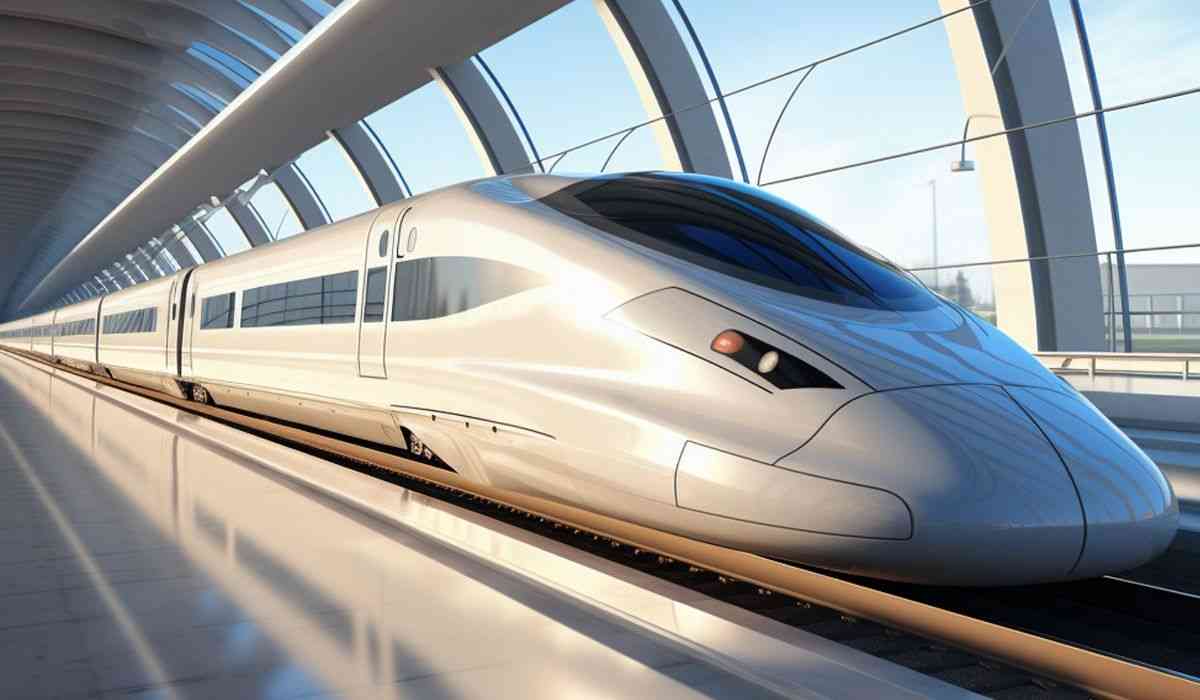
 China advances in the construction of a floating train capable of reaching 1,000 km/h (Freepik)
China has begun the construction of a floating train that will reach an impressive 1,000 km/h, using magnetic levitation (maglev) technology in vacuum tunnels.
The system eliminates friction, allowing the train to “float” and move quickly while offering 5G connectivity even at high speeds. With this innovation, passengers will be able to travel more than 600 km/h faster than current trains and even surpass the cruising speed of commercial airplanes.
One of the challenges of the project is maintaining stable communication at near-sonic speeds. Researchers have suggested installing parallel cables inside the tunnels to emit electromagnetic signals and reduce interference.
The new system will be connected to the existing maglev line in Changsha, while the operational maglev in Shanghai continues to be an example of efficiency, covering 30 km in just seven minutes.
China leads the development of high-speed trains, but other powers, such as Germany and the Netherlands, are also advancing with their own technologies, such as the ICE 3, which reaches 320 km/h.
The global goal is to create fast, smart, and sustainable alternatives to air travel, expanding the possibilities of efficient and environmentally responsible mobility.
Source: The Sun | Photo: Freepik | This content was created with the help of AI and reviewed by the editorial team
The speed is 1000 km/h.
China has built a 2km low vacuum pipeline maglev train experimental line in Shanxi.
It may be built between Hangzhou and Shanghai in the future. pic.twitter.com/lXg1KFqsW0— Sharing Travel (@TripInChina) November 18, 2023
